Discover the stunning salt fields of Vietnam, Cambodia, Laos, and Thailand with our guide! Learn about salt harvesting traditions, cultural etiquette, eco-friendly Vietnam Tours, Cambodia Tours, Laos Tours, Thailand Tours, and top providers for sustainable experiences with Vietnam Travel, Cambodia Travel, Laos Travel, and Thailand Travel. Start your journey today!
 Salt-Fields Bac Lieu Ca Mau (Source: Internet)
Written by Tony Bùi, with over 20 years of experience in the travel industry, personally guiding and organizing tours for over 100,000 travellers across Southeast Asia. This guide draws from firsthand insights, guest feedback from Legend Travel Group surveys. Legend Travel Group since 2008.
Salt fields across Vietnam, Cambodia, Laos, and Thailand are living tapestries of rural life, where ancient harvesting techniques meet breathtaking landscapes. In Vietnam’s Ninh Thuan, Cambodia’s Kampot, Laos’ Vientiane Province, and Thailand’s Samut Songkhram, these fields offer a glimpse into the timeless rhythm of salt production, from sun-evaporation ponds to hand-raked crystals. Whether joining guided Vietnam Tours or exploring independently, these salt fields provide immersive cultural encounters, from local festivals to artisan stories. A blend of tradition and natural beauty, these destinations, facilitated by trusted Vietnam Travel providers, are ideal for culture enthusiasts, photographers, and eco-conscious travelers. Mastering Salt Fields Vietnam Cambodia Laos Thailand etiquette ensures a respectful journey, enhancing this unique adventure.
Following updated travel regulations, these salt fields are accessible via regional airports and local transport. This guide blends cultural insights, practical visiting tips, and sustainable Cambodia Travel ideas for a memorable experience.
Travel to these salt fields requires visas for some nationalities (e.g., Vietnam e-visa $25; Cambodia visa on arrival $30; Laos visa on arrival $35; Thailand exemption 60 days for Swiss). Entry to salt fields is free, with donations ($0.30–$1) appreciated. Guided tours cost $15–$60 (375,000–1,500,000 VND equivalent), and local purchases range from $0.50–$20 (12,500–500,000 VND). Sites are accessible by tuk-tuk, bicycle, or tour transport from nearby towns. Verify visa requirements via official sources.
Traditional Harvesting: In Vietnam’s Ninh Thuan, workers use bamboo rakes to harvest sea salt; Cambodia’s Kampot fields feature Khmer rituals blessing the harvest; Laos’ Vientiane salt pans reflect Hmong influences; Thailand’s Samut Songkhram showcases Thai-Chinese techniques culturetrip.com.
Festivals: Vietnam’s Tet celebrates salt abundance; Cambodia’s Khmer New Year includes field blessings; Laos’ Bun Bang Fai features salt-themed boat races; Thailand’s Songkran involves salt purification rituals.
Local Cuisine and Crafts: Salt enhances pho in Vietnam, amok in Cambodia, sticky rice in Laos, and som tam in Thailand. Crafts include salt lamps in Vietnam and salt-infused soaps in Thailand.
Community Life: Salt fields sustain rural communities, with homestays offering insights into daily life.
Ninh Thuan Salt Fields (Vietnam): Vast coastal pans near Phan Rang, producing Vietnam’s finest sea salt (entry: free).
Kampot Salt Fields (Cambodia): Near Kep, with Khmer family-run operations (entry: free).
Vientiane Province Salt Pans (Laos): Inland fields in Nong Khai, blending Hmong traditions (entry: free).
Samut Songkhram Salt Fields (Thailand): Amphawa’s tidal flats, known for pink salt (entry: free).
Cultural etiquette ensures a respectful experience at salt fields during Cambodia Tours. Here’s your guide:
Greetings: Offer “sua sdei” in Cambodia or “sawasdee” in Thailand with a wai or sampeah; use both hands for transactions to show respect.
Dress: Wear modest clothing covering shoulders and knees for nearby temples; lightweight scarf ($3 or 12,000 KHR) aligns with local norms.
Behaviour: Maintain a quiet demeanor around workers; avoid touching salt pans; ask permission before photographing families or rituals. A guest shared: “Respecting customs made our salt field visit profound.”
Customs: Donations ($0.30–$1) appreciated for community support; avoid littering to preserve ecosystems; tipping guides ($0.50–$2) is appreciated.
Tip: Say “arkun” in Cambodia or “khob khun” in Thailand; use reusable water bottles ($4 or 16,000 KHR) for sustainable Laos Travel. Tony Bùi notes: “Respectful travelers thrive in these cultural landscapes.”
General Tips:
Language: Phrase card ($2 or 8,000 KHR) for local basics; English common in tourist areas.
Respect: Follow site rules; support locals with fair purchases.
Navigation: Offline maps (Maps.me) for fields like Ninh Thuan or Kampot.
Eco-Tip: Bicycles ($2–$5/day or 8,000–20,000 KHR) reduce emissions.
Details: Explore Ninh Thuan fields in Vietnam or Kampot in Cambodia independently; low difficulty.
Schedule: Daily; best during harvest (March–September).
Cost: Free entry; transport (bicycle: $2–$5/day or 8,000–20,000 KHR); purchases: $0.50–$20 (2,000–80,000 KHR).
Location: Ninh Thuan, Kampot, Vientiane, Samut Songkhram.
Eco-Friendly Note: Bicycles minimize impact.
Tip: Visit during harvest; a guest noted: “Self-guided was authentic.”
Details: 1-day group tour to Kampot fields in Cambodia; includes guide, transport, lunch, donations; low difficulty.
Schedule: Daily; departs 8:00 AM from Kep hotels.
Cost: $25–$40/person (100,000–160,000 KHR, includes donations).
Pick-up/Drop-off: Hotels in Kep.
Eco-Friendly Note: Fuel-efficient vans.
Tip: Book via legendtravelgroup.com; a guest noted: “Legend’s tour was culturally rich.”
Details: 1-day guided tour to Kampot fields and Kep’s Pepper Plantation; includes guide, transport, lunch, donations; low to moderate difficulty.
Schedule: Daily; departs 7:30 AM from Phnom Penh.
Cost: $35–$50/person (140,000–200,000 KHR, includes donations).
Pick-up/Drop-off: Hotels in Phnom Penh.
Eco-Friendly Note: Small groups.
Tip: Book via localvietnam.com (Cambodia partner sites); a guest noted: “Combo was enriching.”
Details: 2–3 day tour across Kampot (Cambodia) and Samut Songkhram (Thailand); includes guide, transport, accommodation, meals, donations; moderate difficulty.
Schedule: Daily; departs from Phnom Penh.
Cost: $100–$250/person (400,000–1,000,000 KHR, includes donations).
Pick-up/Drop-off: Hotels in Phnom Penh.
Eco-Friendly Note: Eco-lodges.
Tip: Book Thailand Tours via legendtravelgroup.com; a guest noted: “Multi-day was immersive.”
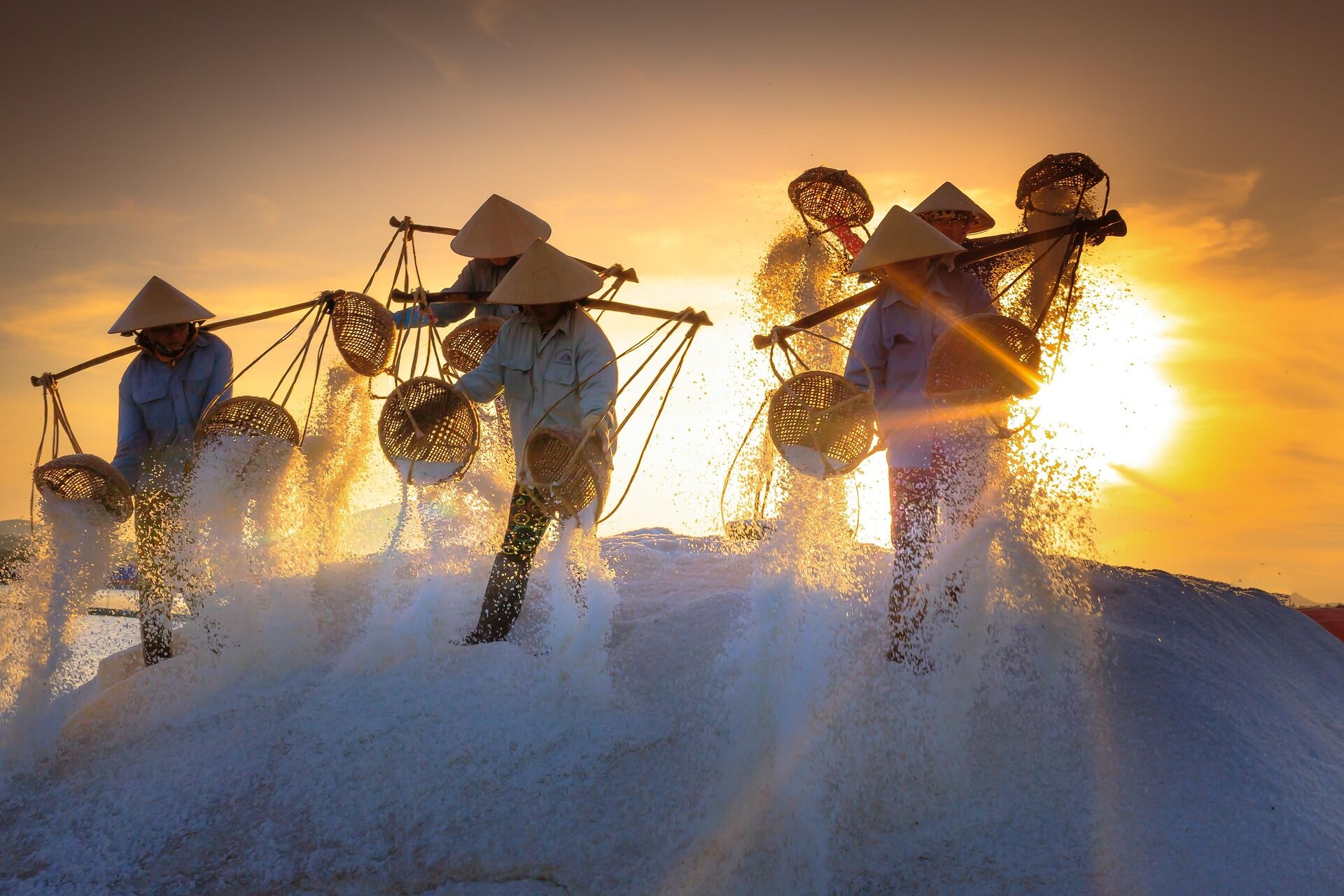 Salt-Field Bac Lieu (Source: Internet)
Self-Guided Exploration: Flexible and authentic, ideal for independent travelers.
Group Cultural Salt Harvest Tours: Affordable and guided, perfect for cultural insights.
Combo Salt Fields and Cultural Tours: Blend harvesting with local traditions.
Multi-Day Salt Fields Heritage Tours: Offer in-depth exploration.
Eco-Friendly Note: Group tours use fuel-efficient transport, supporting green tourism.
Key opportunities include:
Tet (Vietnam): Late January to February, festive; warm (18–28°C).
Khmer New Year (Cambodia): April, field blessings; warm (25–35°C).
Bun Bang Fai (Laos): May, boat races; warm (28–35°C).
Songkran (Thailand): April, purification rituals; hot (28–35°C).
Year-Round: Dry season (January–April) for optimal harvesting views.
Dry season (January–April, 18–35°C) is ideal for field visits. Wet season (May–October, 24–32°C) suits indoor crafts. Morning visits (8:00 AM–11:00 AM) avoid heat. Verify forecasts via accuweather.com.
Online Platforms: Book Laos Tours via legendtravelgroup.com ($15–$60). Provide pick-up details; e-tickets acceptable.
Tour Operators: Legend Travel Group for bundled tours.
Direct: Free entry; book guided tours via local agencies.
Eco-Tip: Digital tickets reduce waste; bicycles minimize emissions.
Tip: Book early for festivals; deposit 10% up to 30 days before departure for peace of mind.
Pack for a comfortable, sustainable visit:
Documents: Passport, visa if required ($30–$36 or 120,000–145,000 KHR), wallet ($5 or 20,000 KHR), tour bookings.
Clothing: Modest clothing covering shoulders and knees; lightweight scarf ($3 or 12,000 KHR); quick-dry clothing and raincoat ($5 or 20,000 KHR); comfortable walking shoes ($15 or 60,000 KHR); hat ($5 or 20,000 KHR).
Essentials: Reusable water bottle ($4 or 16,000 KHR); snacks ($0.50–$2 or 2,000–8,000 KHR); small backpack ($5 or 20,000 KHR); sunscreen ($3 or 12,000 KHR); insect repellent ($3 or 12,000 KHR).
Tech: Phone with translation apps; charger ($10–$15 or 40,000–60,000 KHR); local SIM ($3–$5 or 12,000–20,000 KHR); camera ($50 or 200,000 KHR).
Eco Items: Reusable tote ($3 or 12,000 KHR); phrase card ($2 or 8,000 KHR).
Extras: Small KHR notes; first aid kit ($5 or 20,000 KHR); umbrella ($5 or 20,000 KHR); money belt ($5 or 20,000 KHR). Tip: Pack light; reusable items support sustainability.
Tour Costs
Self-Guided: Free entry; transport (bicycle: $2–$5/day or 8,000–20,000 KHR).
Group Tours: $25–$40 (100,000–160,000 KHR).
Combo Tours: $35–$50 (140,000–200,000 KHR).
Multi-Day Tours: $100–$250 (400,000–1,000,000 KHR). Other Costs
Snacks: $0.50–$2 (2,000–8,000 KHR).
Souvenirs: $1–$20 (4,000–80,000 KHR).
Donations: $0.30–$1 (1,200–4,000 KHR). Total Daily Cost (Per Person)
Budget: $10–$30 (self-guided, transport).
Mid-range: $30–$60 (group tour, purchases).
Luxury: $60–$100 (private tour, premium souvenirs). Tip: Budget $10–$100 for tours and transport; $0.50–$20 for purchases.
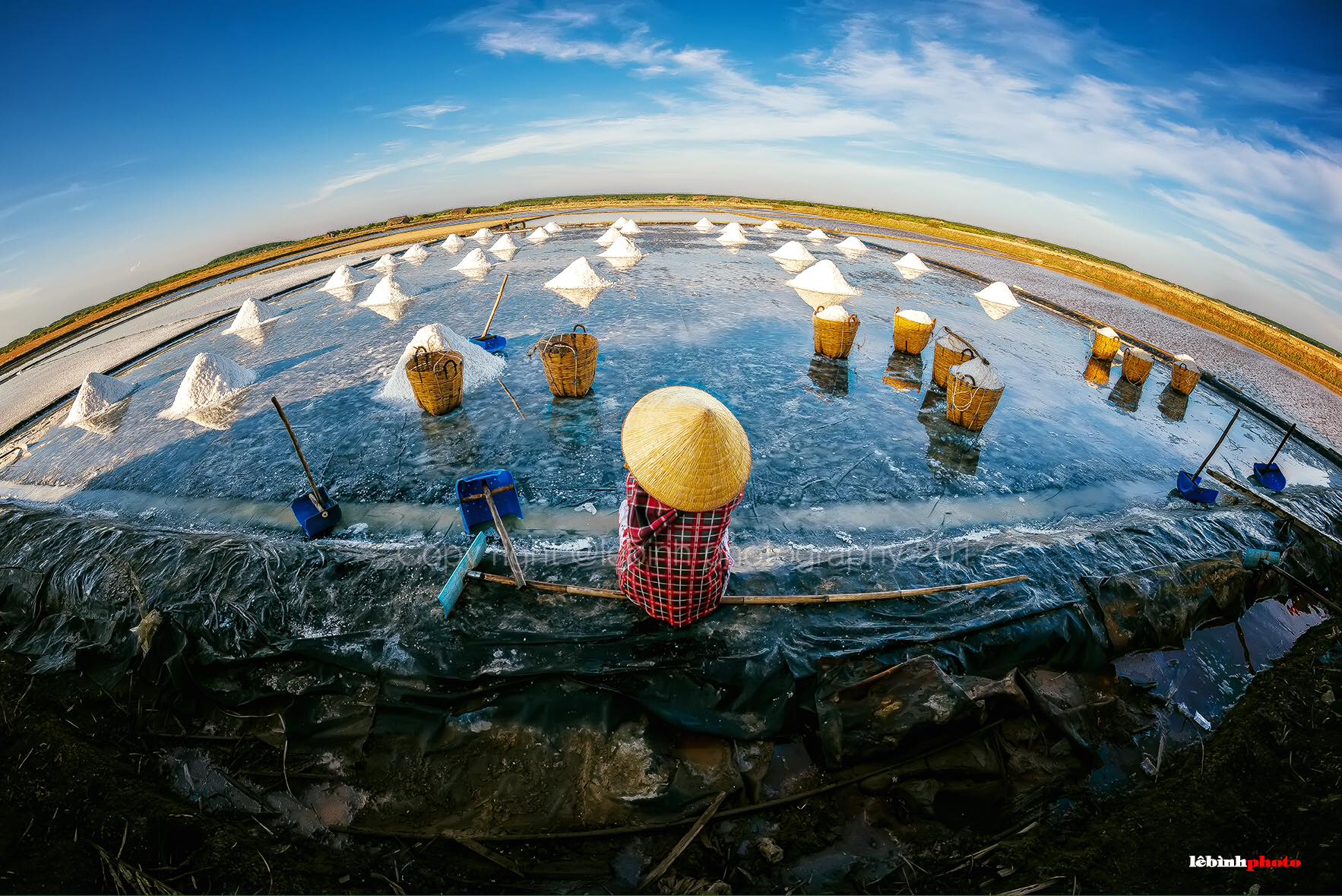 Salt-Fields Bac Lieu Ca Mau (Source: Internet)
Cultural Tips: Visit during harvest (March–September); attend local rituals; explore nearby temples; purchase salt-infused crafts.
Etiquette: Use local greetings; dress modestly; stay quiet around workers; avoid touching salt pans.
Access: Self-guided for flexibility, group tours for insights, multi-day for immersion.
Schedules: Fields accessible daily; peak harvest March–September; book early for festivals.
Sustainability: Bicycles or tuk-tuks; reusable items; fair purchases.
Navigation: Offline maps (Maps.me) for Ninh Thuan or Kampot.
Weather: Dry season (Jan–Apr, 18–35°C) ideal; wet season (May–Oct, 24–32°C) for indoor crafts.
Safety Note: Secure valuables; beware of uneven terrain; carry emergency numbers.
What is the best time to visit salt fields? Dry season (January–April) for harvesting; wet season for fewer crowds culturetrip.com.
How to reach salt fields? Tuk-tuks, bicycles from nearby towns; tours include transport.
What cultural experiences are available? Harvest rituals, local festivals, craft workshops.
Are eco-friendly tours available? Yes, group tours with bicycles; check legendtravelgroup.com.
What to pack? Modest clothing, reusable items, money belt for sustainable trips.
Enhance your salt fields journey with eco-conscious tours from Legend Travel Group:
Salt Fields Eco-Tour ($25–$40/person, 1 day): Guided harvesting and cultural visit.
Southeast Asia Salt Heritage Trail ($100–$150/person, 2 days): Multi-country exploration with low-emission transport.
Cambodia-Laos-Thailand Explorer ($200–$300/person, 3 days): Multi-site adventure with eco-lodges. Prices include guides, transport, and fees; deposit 10% up to 30 days before departure for peace of mind. Explore options at legendtravelgroup.com or contact sales@legendtravelgroup.com / WhatsApp (+84825862222) for your Thailand Travel plans. Legend Travel Group since 2008.
Exploring Salt Fields Vietnam Cambodia Laos Thailand with cultural etiquette—modest attire, polite greetings like “sua sdei,” and respectful behavior—unlocks a vibrant, traditional journey through Southeast Asia’s rural landscapes. With tour costs from $15–$250, eco-friendly Laos Tours, and experiences like Ninh Thuan’s pans and Kampot’s rituals, this trip offers immersion and sustainability. Whether choosing a self-guided or guided experience with Cambodia Travel, respect local customs and book early for the best experience. For more guides, contact Legend Travel Group since 2008. Safe travels!
Sources: Legend Travel Group since 2008.