Discover the Japanese Covered Bridge in Hoi An, Da Nang City! Explore its history, unique architecture, ticket prices, and sustainable tours for a UNESCO adventure. Book with Legend Travel Group today!
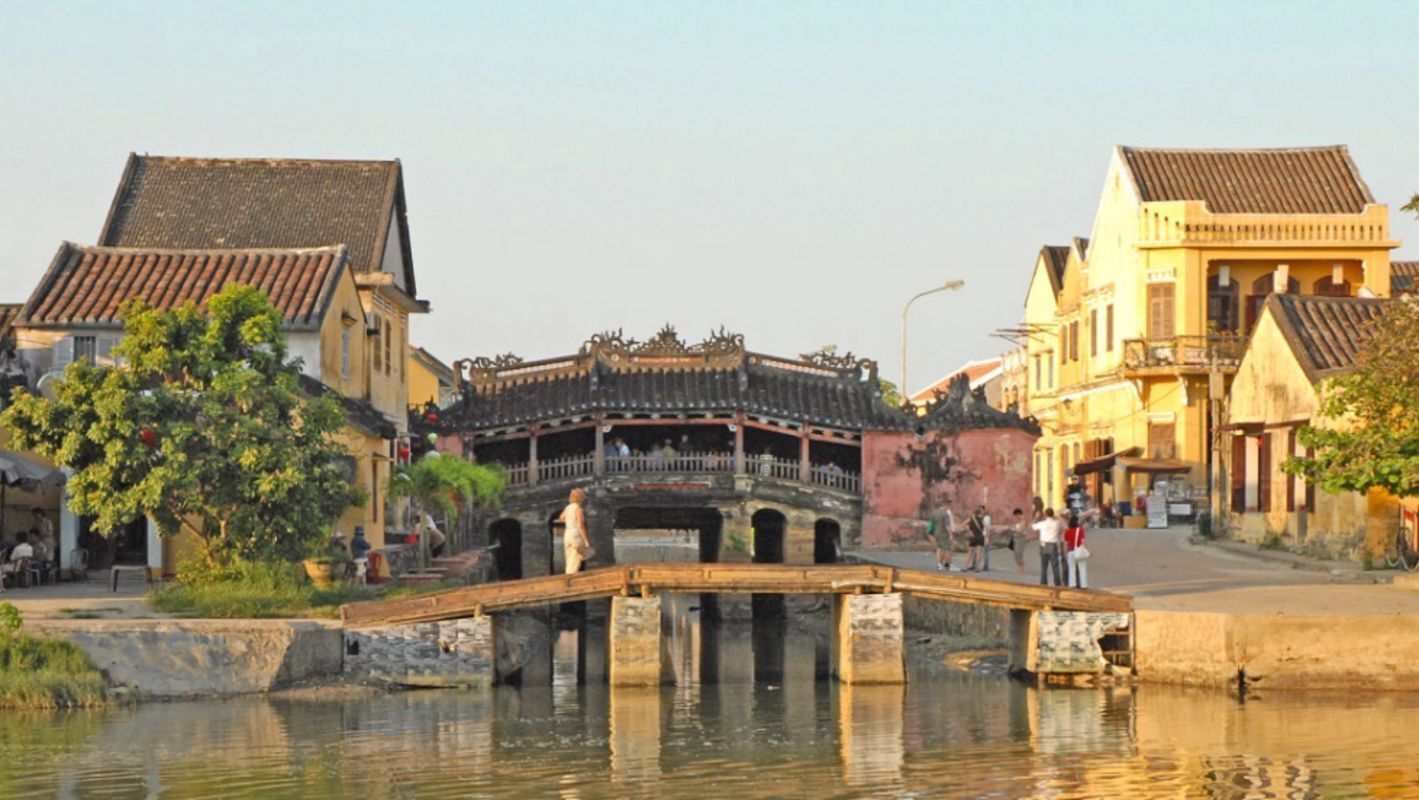 Photograph the storied allure of Hoi An’s heritage (Source: Internet)
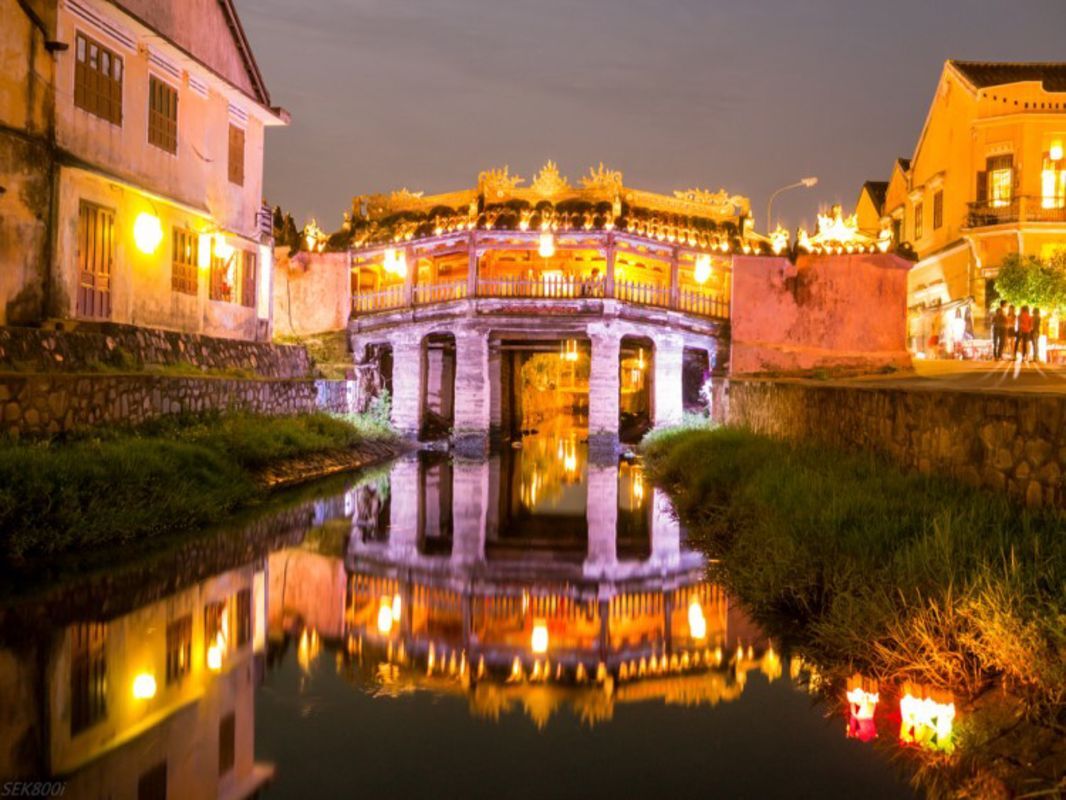
The Japanese Covered Bridge, also known as Chùa Cầu or Lai Vien Kieu, stands as an enduring symbol of Hoi An Ancient Town, now Minh An Ward in Da Nang City, following the merger of Quang Nam Province. Constructed in the 1590s by Japanese merchants, this UNESCO World Heritage Site spans a Thu Bon River tributary, connecting Tran Phu and Nguyen Thi Minh Khai streets. Renowned for its elegant blend of Japanese, Vietnamese, and Chinese architectural styles, the 18-meter bridge features a pagoda dedicated to Tran Vo Bac De, the Northern Deity, and attracts thousands of Da Nang’s 8 million annual visitors. Its depiction on Vietnam’s 20,000 VND note underscores its cultural significance. With sustainable tourism initiatives preserving its legacy, the bridge offers a window into Hoi An’s multicultural past. Legend Travel Group, a leader in sustainable tourism, curates eco-friendly tours to experience this iconic landmark, bookable via links throughout this guide. Step into history—reserve your tour now
Legend Travel Group delivers authentic Southeast Asia experiences, prioritizing sustainability and cultural immersion. Our Hoi An tours feature low-impact transport like bicycles and electric shuttles, guided by local experts who reveal the bridge’s historical and architectural secrets. We support Minh An’s artisans and align with Da Nang City’s “Green Heritage” initiative to preserve UNESCO sites. With transparent pricing, free cancellations up to 48 hours before departure, and 24/7 support, we ensure a seamless visit. Explore the Japanese Covered Bridge responsibly with our curated tours—book via the links on this page!
Quang Nam Province has merged into Da Nang City, making Hoi An Minh An Ward and the Japanese Covered Bridge part of this UNESCO-protected area. This restructuring eliminates the district level, but Hoi An’s cultural heritage remains vibrant. Da Nang City enhances sustainable tourism with cycling paths, electric transport, and a VND500 billion flood mitigation project (2023), ensuring access to the bridge, though November floods may affect surrounding streets.
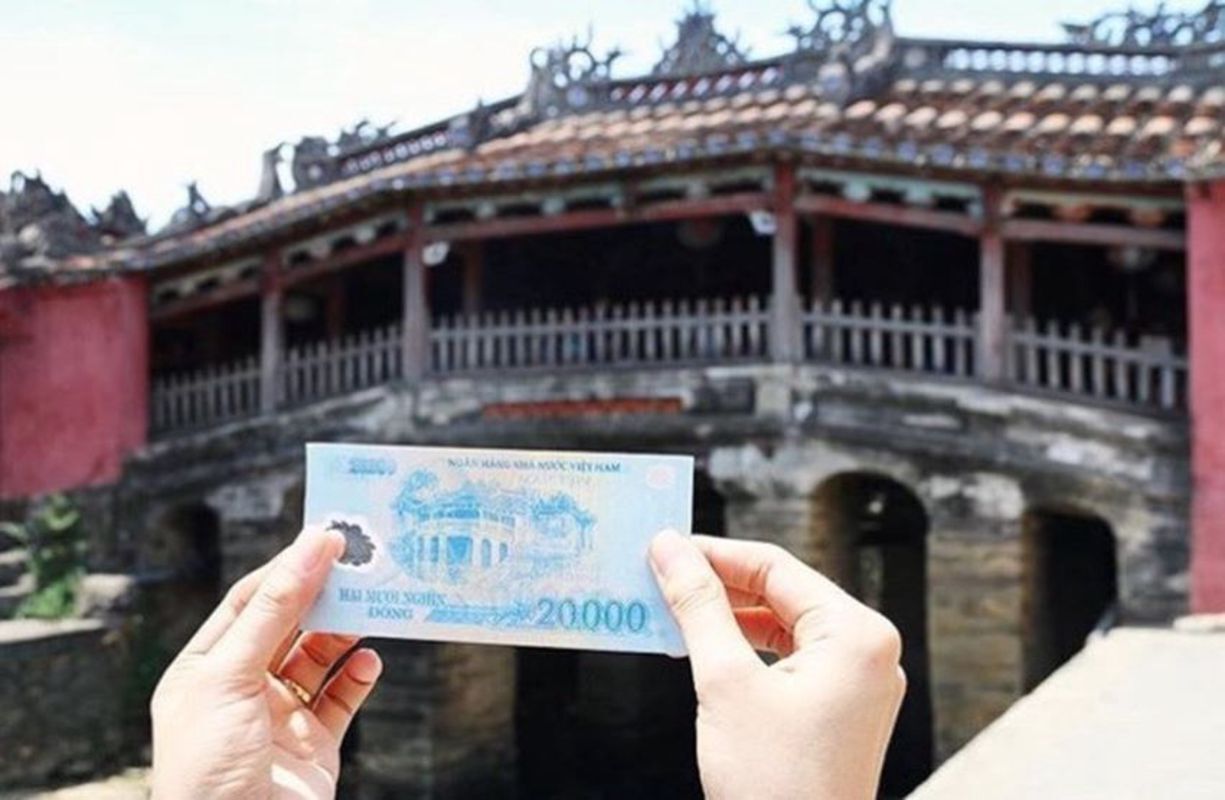 Experience Hoi An Tours with sustainable exploration (Source: Internet)
Built around 1593 by Japanese merchants to connect their enclave with the Chinese quarter across a Hoai River canal, the Japanese Covered Bridge reflects Hoi An’s role as a 16th–19th-century trading hub. In 1653, a T-shaped pagoda was added, dedicated to Tran Vo Bac De, believed to protect against storms and floods, not Buddha, as is typical in pagodas. Local legend links the bridge to the Namazu myth, a giant catfish causing earthquakes, with the bridge acting as a “sword” to subdue it, symbolizing harmony between Japan, Vietnam, and India. In 1719, Lord Nguyen Phuc Chu named it Lai Vien Kieu (“bridge for faraway guests”), emphasizing Hoi An’s welcoming spirit. Recognized as a National Historical-Cultural Monument in 1990, the bridge has undergone seven major renovations (1763, 1815, 1875, 1917, 1962, 1986, 1996), with the latest in 2024 (reopened August 3, 2024), reinforcing its structure while preserving its heritage, though some debate modernized tiles. Its image on the 20,000 VND note cements its status as Hoi An’s cultural heart.
The Japanese Covered Bridge, approximately 18 meters long and 3 meters wide, showcases a harmonious blend of architectural styles:
Japanese Influence: The curved wooden frame, vermilion paint, and dog and monkey statues at the ends reflect Japanese aesthetics. These statues, sacred in Japanese culture, mark the construction period (Year of the Monkey to Year of the Dog, per the lunar zodiac) and honor emperors born in those years.
Vietnamese Features: The yin-yang tiled roof, a hallmark of Vietnamese architecture, adorns the bridge and pagoda, with dragon motifs in classic Vietnamese style carved into wooden beams.
Chinese Elements: Intricate trusses and Chinese inscriptions, along with porcelain bowls capping roof tiles, highlight Chinese influence, evolving through renovations.The bridge’s soft, arched silhouette over the Hoai River, painted in vibrant hues, creates a photogenic landmark. The pagoda, centrally positioned, features a wooden altar to Tran Vo Bac De, with two narrow corridors for rest, each with seven wooden spans, enhancing its functional and aesthetic appeal. Despite renovations shifting its style, the 2024 restoration retained its iconic charm, though some critique modern tiles for deviating from the original Japanese design.
Visiting the Japanese Covered Bridge requires an Hoi An Old Town entry ticket, which funds UNESCO preservation:
Foreign Tourists (Adults and Children Over 15): $6 (120,000 VND), covering 5 of 22 attractions (e.g., bridge, Tan Ky House).
Vietnamese Tourists (Adults and Children Over 15): $3.20 (80,000 VND).
Children (Under 16): Free.
Seniors (Over 60) and Veterans: Discounted per Vietnamese law.
Hoi An Residents: Free with ID.
Where to Buy: Ticket booths at Old Town entrances (e.g., Tran Phu, Nguyen Thi Minh Khai) or included in Legend Travel Group tours.
Validity: Ticket valid for your entire stay; retain for re-entry.
Access Hours: Bridge open 24/7 within Old Town’s pedestrian zone; pagoda interior 8:00 AM–6:00 PM daily, including holidays and Tet.
Best Times: Early morning (8:00–10:00 AM) for cooler weather (24–28°C or 75.2–82.4°F) and fewer crowds; evening (5:00–6:00 PM) for sunset and lantern-lit ambiance, especially during Full Moon Lantern Festival (14th lunar day monthly).
Notes: Prices stable but may adjust slightly in peak seasons (March–August). Carry exact VND; booths may not accept cards. Pagoda may close during heavy rain; pedestrian zone restricted 8:30 AM–11:00 AM, 3:00 PM–9:30 PM, requiring ticket checks.
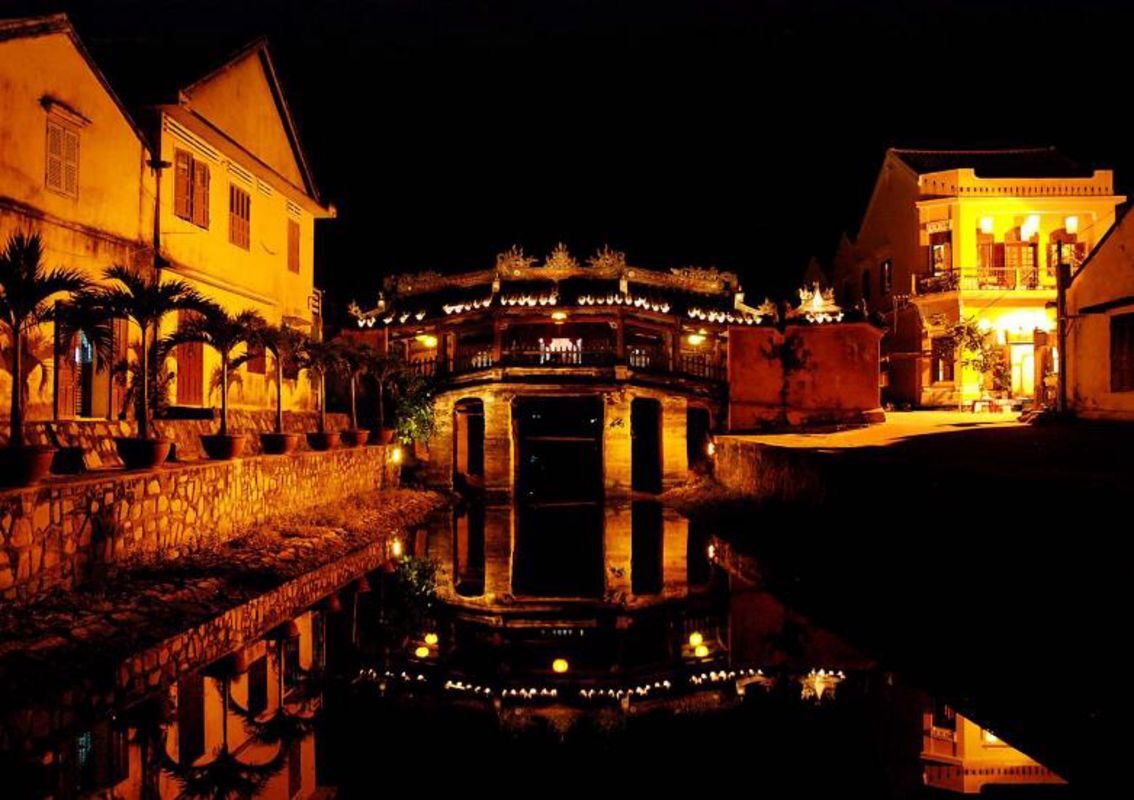 Start your Hoi An Travel with serene cultural vibes (Source: Internet)
Located at the intersection of Tran Phu and Nguyen Thi Minh Khai streets in Minh An Ward, the bridge is 4 km from An Bang Beach and 28 km from Da Nang International Airport (DAD). Sustainable transport options include:
Walking (Recommended): Free; 5–10 minutes from Old Town center (e.g., Hoi An Market, 200 m). Zero-emission; explore lantern-lit streets. Follow Tran Phu Street; use Maps.me for navigation.
Bicycle: $1–$2/day (25,000–50,000 VND); 2–5 minutes. Eco-friendly; park outside pedestrian zones ($0.25–$0.60 or 6,250–15,000 VND). Rent from Hoi An Bike Rental (+84 961 172 423). Included in our Hoi An Heritage Cycling Tour ($55–$75).
Cyclo: $2–$5/trip (50,000–125,000 VND); 5–10 minutes. Supports local drivers; book at Tran Phu Street.
Public Bus (LK02): $0.80–$1.20 (20,000–30,000 VND) to Hoi An Bus Station; 10-minute walk to bridge. Every 15–20 minutes (6:00 AM–6:00 PM); use DanaBus app. Low-emission.
Taxi/Grab: $12–$15 (300,000–375,000 VND); Xanh SM electric taxis $13–$16 (325,000–400,000 VND). Book via Grab or Mai Linh (+84 236 352 5252). Xanh SM cuts CO2 by 30%.
Guided Tours: Group tours $10–$45 (250,000–1,125,000 VND); private tours $80–$120 (2,000,000–3,000,000 VND). Includes eco-transfers; book via Legend Travel Group.
Sustainable Tip: Use public buses or electric taxis; combine with Old Town walking for minimal impact.
Notes: Old Town is pedestrianized (8:30 AM–11:00 AM, 3:00 PM–9:30 PM); park outside zones. November floods may affect access; check weather via AccuWeather.
 Learn Hoi An’s UNESCO legacy with expert insights (Source: Internet)
Overview: Explore the bridge’s 18-meter structure, with its yin-yang tiled roof, dragon carvings, and dog/monkey statues, reflecting Japanese, Vietnamese, and Chinese styles. The pagoda’s Tran Vo Bac De altar adds spiritual depth.
Cost: Included in Old Town ticket ($6 or 120,000 VND).
Time Needed: 15–30 minutes.
Sustainable Tips: Use digital QR guides (2023) to reduce paper waste; avoid touching carvings.
Highlights: “A stunning blend of cultures!” (Tripadvisor, 4.5/5 stars).
Tip: Photograph from Hoai River banks at sunset; included in our Hoi An Heritage Walking Tour ($55–$75).
Overview: Enter the T-shaped pagoda to view the Tran Vo Bac De statue and pray for prosperity. Chinese inscriptions and wooden corridors highlight its multicultural roots.
Cost: Included in Old Town ticket ($6 or 120,000 VND).
Time Needed: 10–15 minutes.
Sustainable Tips: Maintain silence; support local artisans by buying nearby crafts.
Highlights: “Serene and spiritual, a hidden gem!” (Tripadvisor, 4.6/5 stars).
Tip: Dress modestly (covered shoulders, knees); visit early to avoid crowds.
Overview: Experience the bridge glowing under lanterns during the monthly Full Moon Lantern Festival, with river boats and street performances creating a magical ambiance.
Cost: Included in Old Town ticket ($6 or 120,000 VND); boat rides $6–$8/boat (150,000–200,000 VND, up to 4 people).
Time Needed: 1–2 hours (6:00 PM–10:00 PM).
Sustainable Tips: Use eco-friendly boats; avoid plastic waste.
Highlights: “Lanterns made the bridge enchanting!” (Tripadvisor, 4.8/5 stars).
Tip: Book boats via Klook; check lunar calendar. Included in our Hoi An Night Glow Tour ($55–$75).
Overview: Stroll Tran Phu and Nguyen Thi Minh Khai streets, visiting Tan Ky House, Phuc Kien Assembly Hall, or Hoi An Market (all within 200 m, included in Old Town ticket). Savor cao lầu ($1–$2.50 or 25,000–62,500 VND) at nearby Thanh Cao Lầu.
Cost: Free; dining $1–$5 (25,000–125,000 VND); tailoring $20–$100 (500,000–2,500,000 VND).
Time Needed: 1–2 hours.
Sustainable Tips: Support local vendors; choose cafes with biodegradable packaging.
Highlights: “Old Town’s charm complements the bridge!” (Tripadvisor, 4.5/5 stars).
Tip: Try lemongrass kumquat tea ($0.50 or 12,500 VND) at riverside stalls.
The Japanese Covered Bridge is central to Hoi An’s sustainable tourism efforts:
Conservation: The 2024 restoration (August 3, 2024) reinforced the bridge’s structure, though modern tiles sparked debate. UNESCO and local funds support maintenance.
Eco-Friendly Practices: 70% of nearby vendors use biodegradable packaging, per Vietnam’s 2022 anti-plastic campaign. Cycling paths and electric shuttles reduce emissions.
Community Support: Ticket revenue funds 100+ local artisans and preservation via the Hoi An Center for Cultural Heritage Management.
2026–2028 Trends: Plans include solar-powered lighting, vegan dining options, and expanded QR-coded guides to minimize paper waste, aligning with Asian tourism growth (Chinese, Korean markets).
Challenges: Post-restoration aesthetics remain controversial; November floods require vigilance. Visitors should book early morning tours to avoid crowds.
Legend Travel Group’s tours integrate these practices, using eco-transfers and supporting local economies, ensuring a low-impact visit.
Plan Ahead: Book tours 2–3 weeks in advance via Legend Travel Group or Klook (+84 938 987 654), especially for festivals or peak seasons (March–August). Check lunar calendar for Full Moon Lantern Festival dates.
Dress Code: Casual attire; modest clothing (covered shoulders, knees) for pagoda; comfortable shoes for cobbled streets.
Pack Smart: Reusable water bottle, small VND for vendors, sunscreen ($1–$2 or 25,000–50,000 VND), camera (no flash in pagoda).
Budget Wisely: Expect $20–$120/day in Hoi An (budget: $20–$50; mid-range: $50–$80; luxury: $80–$120). Old Town ticket $6; dining $1–$5; tours $10–$120.
Stay Safe: Secure valuables during festivals; avoid slippery paths in November floods; check weather via Vietnam News.
Sustainability: Support eco-vendors; use bikes ($1–$2/day) or walk; avoid plastic waste with reusable bags.
Cultural Respect: Maintain silence in the pagoda; don’t touch statues; tip guides ($1–$2 or 25,000–50,000 VND).
Navigation: Allow 30–60 minutes at the bridge; combine with Hoi An Market (300 m) or An Bang Beach (4 km) for a half-day itinerary. Offline maps essential.
 Hoi An Lantern Lighting (Source: Internet)
Our sustainable tours offer immersive experiences at the Japanese Covered Bridge, tailored for eco-conscious travelers:
Hoi An Heritage Walking Tour ($55–$75/person): Japanese Covered Bridge, Quan Cong Temple, Tan Ky House, Full Moon Lantern Festival. Includes Old Town ticket ($6), eco-transfers, and cao lầu tasting.
Hoi An Night Glow Tour ($55–$75/person): Bridge at sunset, lantern festival, Thu Bon River boat ride, night market. Includes eco-transfers and snacks.
Hoi An Heritage Cycling Tour ($60–$80/person): Bridge, Tra Que Village, An Bang Beach, banh mi tasting. Includes bike rentals, eco-transfers, and lunch.
Hoi An & My Son Cultural Tour ($75–$95/person): Bridge, My Son Sanctuary, Thanh Ha Pottery Village. Includes tickets ($6–$7.50), eco-transfers, and meals.
Central Vietnam Explorer ($350–$550/person, 3–4 days): Bridge, Hoi An, Da Nang, homestays ($15–$50/night), Cu Lao Cham. Includes all activities, meals, eco-transfers.
Prices include English-speaking guides, eco-transfers, entrance fees ($6), and meals/snacks. Group discounts (10% off for 10+ travelers) and seasonal promotions available. Book now via links around this page!
The Japanese Covered Bridge in Hoi An is a 17th-century masterpiece, blending Japanese, Vietnamese, and Chinese architecture with profound cultural significance. With a $6 Old Town ticket, 24/7 access, and a recent 2024 restoration, it offers an enchanting glimpse into Hoi An’s trading past, from its Namazu myth to Tran Vo Bac De worship. Enhanced by sustainable practices like eco-tours and biodegradable packaging, the bridge remains Hoi An’s heart, featured on Vietnam’s 20,000 VND note. Legend Travel Group’s Hoi An Tours guide you through this iconic landmark, ensuring a sustainable Hoi An Travel experience that supports Minh An’s artisans and preserves UNESCO heritage. Don’t miss this iconic landmark—browse our featured tours and book your Hoi An adventure today!
Ready to explore the Japanese Covered Bridge’s timeless charm? Reserve your tour with Legend Travel Group and immerse yourself in Hoi An’s cultural legacy sustainably!
Author Bio: Written by Tony Bùi, with over 20 years of experience in the travel industry, guiding 100,000+ travellers across Southeast Asia. This guide draws from firsthand insights, guest feedback from Legend Travel Group surveys.
Source: By Tony Bùi at Legend Travel Group